
Making Memes That Feel Relatable
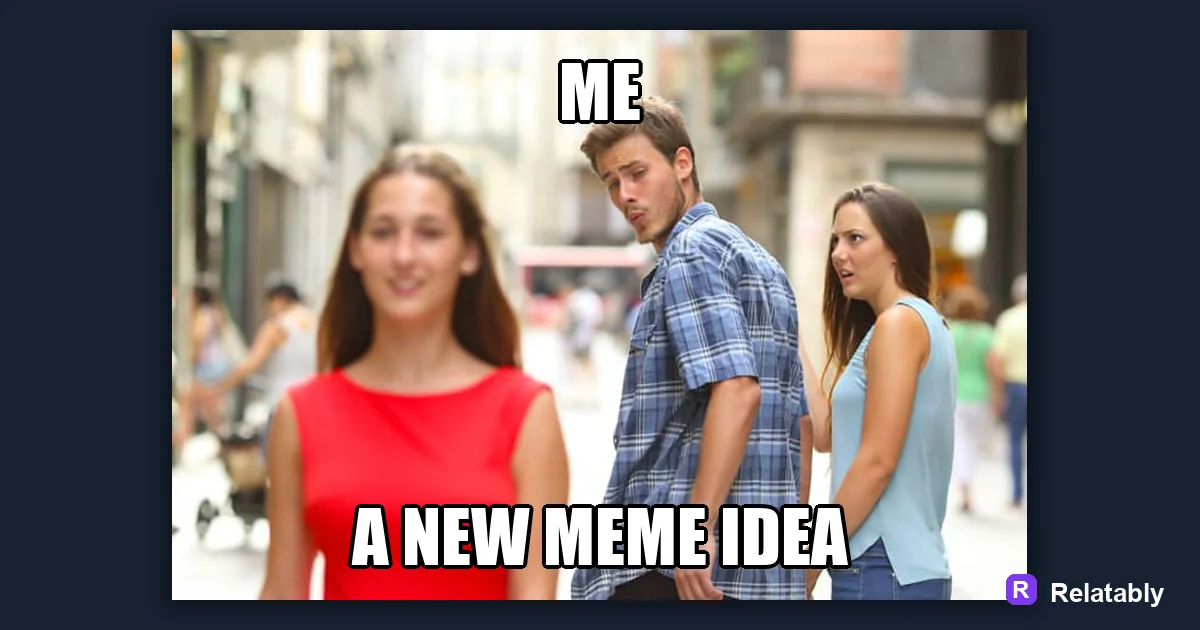
Why relatable memes spread and how to write one on purpose.
On this page
A relatable meme names a feeling people already have but rarely say. Spot a tiny shared moment, match it to a clear image, and caption it so readers think that is so me.
Why relatable beats clever
A relatable meme works because the reader sees themselves in it. The reaction you want is not laugh out loud, it is a quiet that is literally me.
Clever jokes can impress, but relatable memes get shared because people forward them to say this is us. That sense of being seen is what drives the reshare.
This is why relatable memes age so well. A clever reference can fade when the trend dies, but a true human habit stays funny for years.
Turning a feeling into one clear image
Once you have the moment, pick an image that shows the emotion at a glance. A relatable meme fails if the reader has to work to connect the picture and the words.
Simple, common reaction images often beat fancy ones because they read instantly. The faster the recognition, the stronger the relatable hit.
Match the energy of the image to the size of the moment. A tiny everyday annoyance pairs better with a small sigh than with a dramatic over the top reaction.
| Feeling | Image cue | Caption angle |
|---|---|---|
| Avoiding a task | Lying on the floor | Me vs my to do list |
| Social burnout | Hiding under blanket | After one outing |
| Tiny victory | Small fist pump | Found parking up front |
Writing the that is so me caption
The caption should sound like a private thought, not an announcement. Use everyday words and write it the way you would text a close friend.
Build and test the wording in the Meme Generator. Try a few phrasings and keep the one that feels most like something you would actually say.
Avoid explaining the joke. A relatable caption works because the reader fills in the rest from their own life, so leaving a little gap makes it hit harder.
What makes people tag a friend
Relatable memes spread through tags and reshares more than likes. People send them to a friend as a way of saying this is you, or this is us.
The strongest driver is precise recognition. The more exact the moment, the more likely someone names a specific friend in the comments.
This is the quiet superpower of relatable memes. Every tag is free promotion, because it pulls a new person into your post who is likely to relate just as hard.
What drives a relatable meme reshare
Staying specific without getting niche
There is a sweet spot between too broad and too narrow. Too broad feels boring. Too narrow only lands for a handful of people.
Aim for a moment that feels oddly specific yet is shared by millions. A habit tied to phones, food, sleep, or running late usually hits that balance. These topics touch almost everyone, so the exact detail still lands wide.
A simple test helps. Read your idea to one friend. If they laugh and say they do that too, you are in the sweet spot. If they look confused, the moment is too narrow.
When you do go niche, lean into a clear community like students or new parents. Inside that group the recognition is even stronger, just know the reach will be smaller.
- Pick a moment most adults share
- Add one exact detail for the spark
- Avoid inside jokes only your circle gets
- Test it on one friend before posting
To go deeper, read work memes, school memes, how to make a meme, and gaming meme ideas and how to make them.
Turn the idea into a finished meme
Use the template library as a creative constraint: pick the format first, then write the caption to fit that format.
| Decision | Recommendation |
|---|---|
| Template choice | Reaction, comparison, panel, classic, or blank utility |
| Caption test | Can someone understand the setup in under two seconds? |
| Final check | Does the image still work if the caption is read on a small screen? |
- Use a recognizable blank when speed matters.
- Use your own photo when the specific moment is more important than the format.
- Cut any caption word that explains what the image already shows.