Caption the People Who Don't Know vs. People Who Know Meme Template
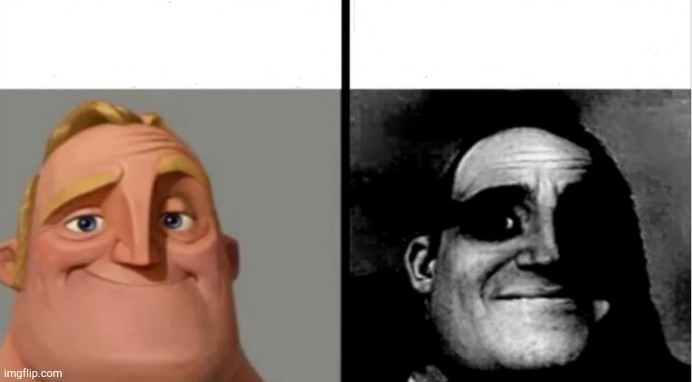
This template contrasts two groups: those who are blissfully unaware of something with those who are burdened by the knowledge of it. It is used to highlight the difference between ignorance and awareness, often framing knowledge as a curse rather than a gift.
Caption this template- Category
- Comparison Meme Templates
- Size
- 692 x 382 px
- Format
- Image
- Price
- Free, no sign up
Where the People Who Don't Know vs. People Who Know meme comes from
The template grew out of social media comparison formats popular on Twitter and Reddit in the late 2010s, typically structured as a two-column image showing a happy, oblivious group against a stressed or traumatized knowing group. The specific visual often shows a cheerful crowd on one side and a burdened individual on the other.
How to caption the People Who Don't Know vs. People Who Know meme
Label the unaware group with a common misconception or the naive version of a belief, then label the knowing group with the actual reality or niche piece of information that makes the topic more complicated or disturbing. The most effective versions hinge on something where knowledge genuinely makes the situation worse. Open it in the meme generator, or read the comparison meme guide for more.
People Who Don't Know vs. People Who Know caption ideas
Need a starting point? Try one of these on the People Who Don't Know vs. People Who Know template, then make it your own in the meme generator.
- People who don't know: 'wow, that restaurant must be amazing, it's always packed' / People who know: it has one cook and a 90-minute wait
- People who don't know: 'just merge it, it's a one-line change' / People who know: that one line touches 200 files
- People who don't know: enjoying the hot dog / People who know what's in it
- People who don't know: 'the meeting could've been an email' / People who know it will still be a meeting next week too
- People who don't know: 'your dog is so well behaved!' / People who know what the couch looks like
Best uses for the People Who Don't Know vs. People Who Know template
Use the People Who Don't Know vs. People Who Know template when the joke fits a comparison format and the image can explain the feeling before the reader finishes the caption. It is strongest for this-versus-that jokes, ranked choices, and option contrasts.
This blank is 692 x 382 px and is a still image, so place the most important words where they stay readable after a feed crop. The wide frame works best when the caption stays centered so timeline crops do not cut off the joke.
The sample captions are more detailed, so trim aggressively before posting on small screens. Before exporting, read the caption once without looking at the image; if it still needs a long explanation, switch to a simpler setup or a more obvious related template.
Caption patterns to try
| Pattern | Why it works |
|---|---|
| People who don't know: 'wow, that restaurant must be amazing, it's always packed' / People who know: it has one cook and a 90-minute wait | This works because it gives the reader a specific situation instead of a vague label. |
| People who don't know: 'just merge it, it's a one-line change' / People who know: that one line touches 200 files | This pattern keeps the setup concrete, which helps the template carry the reaction. |
| People who don't know: enjoying the hot dog / People who know what's in it | This is a useful direction when you want the punchline to feel personal or self-aware. |
Common mistakes with this blank
- Writing a caption that explains the whole joke instead of letting the People Who Don't Know vs. People Who Know image do part of the work.
- Placing text over the most expressive part of the image, especially faces, gestures, signs, or the main action.
- Using three different ideas in one meme. This template works better when it points at one clear situation.
- Exporting before checking the meme at phone size. If the smallest words blur together, shorten the caption first.